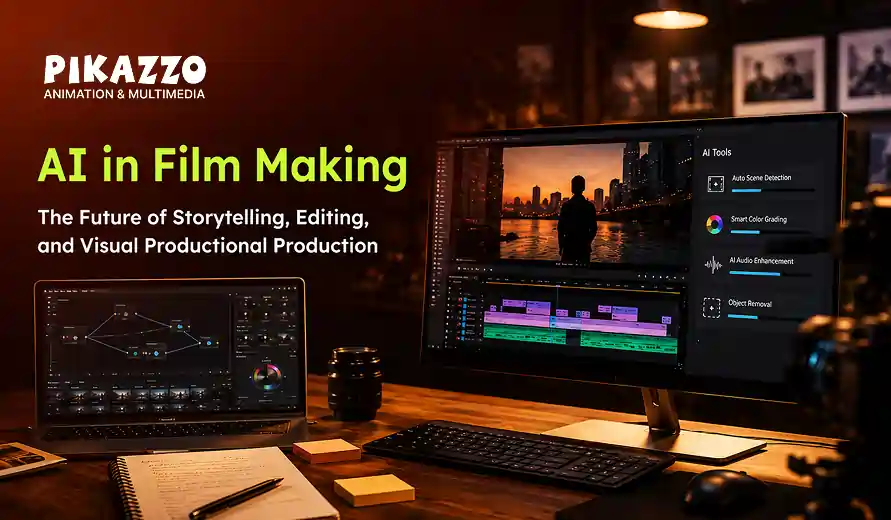
The film industry has always welcomed new ideas that help creators tell better stories. From silent films to digital cinema, each generation has seen changes that have improved how films are planned, produced, and presented to audiences. Today, AI in Film Making is becoming one of the biggest developments in the industry. It helps production teams manage time, organize large projects, improve editing, and create realistic visuals while keeping human creativity at the center of every film. Rather than replacing filmmakers, AI supports them by handling repetitive tasks, freeing them to spend more time developing memorable stories and unforgettable characters.
AI in Film Making Is Changing Modern Storytelling
Storytelling has always been the foundation of every successful movie. Audiences remember characters, emotions, and meaningful moments more than the technology used behind the scenes. AI supports writers by organizing research, comparing script versions, checking scene consistency, and identifying missing details in a screenplay.
Many writers also use Artificial Intelligence in filmmaking to collect reference material, build character profiles, and organize timelines before writing the final script. These tools save time during the planning stage, but the emotional depth of a story still depends entirely on the writer’s imagination and experiences.
Human creativity remains irreplaceable because genuine emotions arise from real-life experiences, relationships, and personal understanding.
AI in Film Making During Pre-Production
Every successful movie begins with careful planning. Before filming starts, production teams must prepare scripts, shooting schedules, budgets, locations, props, costumes, and casting plans.
AI software can study an entire screenplay within minutes and prepare detailed reports for different departments. It identifies characters, scene locations, day and night sequences, vehicles, costumes, visual effects, crowd scenes, and action sequences. This allows production managers to organize work more quickly.
Using AI at this stage also helps reduce manual errors while giving every department a clear understanding of what is required before cameras begin recording.
Script Analysis Becomes Faster
Reading hundreds of pages of scripts takes considerable time, especially for large productions.
AI systems automatically organize screenplay information by separating scenes according to locations, characters, dialogue, and production requirements. Directors, costume designers, camera teams, and production managers receive structured information that makes planning much easier.
Instead of spending days reviewing scripts manually, teams can begin preparing locations, equipment, and schedules much sooner.
Smarter Casting Decisions
Finding the right actor for each character is one of the most important responsibilities during production.
AI can compare character descriptions with actor profiles, previous performances, language skills, availability, and audience popularity. This gives casting directors additional information before making final selections.
However, chemistry between actors, emotional performances, and artistic interpretation cannot be measured by software. Directors continue making the final decision because acting depends on personality, expression, and emotional connection.
Better Production Scheduling
Film production often involves hundreds of people working together. Weather changes, location availability, transportation issues, and actor schedules can all affect shooting plans.
AI scheduling software studies multiple factors at once and prepares organized production calendars. If unexpected delays occur, new schedules can be generated much faster than traditional planning methods.
This allows production teams to manage complex projects more comfortably while reducing unnecessary delays.
AI Video Editing Is Saving Time for Editors
Editing is one of the longest stages of film production because editors review countless hours of recorded footage before creating the final version.
Modern AI video editing software automatically sorts clips, removes duplicate footage, detects blurry shots, identifies shaky camera movement, and organizes scenes based on characters or locations. Editors no longer spend as much time searching through thousands of video files.
Even with these improvements, editors continue making creative decisions regarding pacing, emotional timing, scene transitions, and storytelling. Technology simply handles repetitive technical work while experienced editors shape the final movie.
AI Video Generator Solutions for Creative Production
Many studios are experimenting with AI video generator platforms during early production stages. These systems can create concept videos, simple animations, visual references, and temporary scene previews before expensive filming begins.
Directors often use these previews when discussing camera angles, scene composition, lighting ideas, and production planning with different departments.
Although generated visuals are becoming more realistic, they mainly serve as planning resources rather than replacing professional cinematography or live performances.
AI for Video Production Improves Workflow
Modern productions involve cameras, lighting, sound equipment, editing systems, and large storage libraries. Managing these resources requires careful coordination.
Using AI for video production, studios can organize footage automatically, label scenes, synchronize audio, prepare subtitles, and monitor production progress. Production teams spend less time searching for files because everything is categorized more efficiently.
Independent creators also benefit because these tools reduce workload without requiring large technical teams.
Visual Effects Are Becoming More Accessible
Visual effects have become an important part of modern cinema. Fantasy films, science fiction, superhero movies, and historical dramas often depend heavily on digital environments.
AI assists visual artists with tasks such as:
- Background removal
- Motion tracking
- Object recognition
- Crowd generation
- Face replacement
- Lighting adjustments
- Scene restoration
- Environment creation
Artists remain responsible for the final appearance because realistic visual effects still require creativity, experience, and artistic judgment.
AI Movie Making Tools for Independent Creators
Independent film makers often work with limited budgets and smaller production teams. Modern AI movie making tools help them complete work that previously required expensive software and large crews.
These tools can assist with script organization, editing support, subtitle creation, sound cleanup, production scheduling, and visual planning.
As a result, smaller studios have greater opportunities to produce professional-quality films without spending beyond their financial limits.
Sound Design and Music Production
Good sound design helps audiences feel every emotion within a movie. Dialogue, background music, environmental sounds, and special effects all contribute to the viewing experience.
AI assists sound engineers by removing unwanted background noise, organizing audio files, balancing sound levels, and separating voices from music tracks.
Musicians still compose original scores, while sound designers decide how every scene should sound emotionally. Human artistic judgment remains essential throughout the process.
Digital Characters and Virtual Actors
Film studios increasingly use digital characters in scenes involving fantasy creatures, historical recreations, dangerous stunts, or large crowd sequences.
AI supports artists when creating facial expressions, body movement, and realistic animation for virtual characters. Digital doubles are also used during action scenes where safety is a major concern.
Even with these improvements, audiences continue to appreciate authentic human performances because genuine emotion is difficult to reproduce digitally.
Restoring Classic Cinema
Many older films have suffered damage due to aging film reels and storage conditions.
AI restoration software helps repair scratches, improve image quality, stabilize old footage, restore faded colors, and reduce visual noise. These improvements allow classic movies to be enjoyed by modern audiences while preserving their original artistic value.
Film archives across the world now use these methods to protect important pieces of cinema history.
Generative AI in Media and Entertainment Is Expanding Creative Possibilities
The discussion around Generative AI in media and entertainment has grown rapidly over the past few years. Production companies are testing new ways to prepare concept art, background environments, early visual designs, and promotional material before full-scale production begins.
These systems provide creative references that artists can study while developing their own original work. Human supervision remains important because every final decision must match the director’s artistic vision.
The purpose of these tools is to support production teams rather than replace creative professionals.
Marketing Films With AI Support
Completing a film is only part of the journey. Studios must also reach audiences through trailers, posters, interviews, and promotional campaigns.
AI studies audience preferences, trailer performance, viewing habits, and regional interests. Marketing teams use this information while planning release dates and promotional strategies.
Creative professionals still decide how a movie should be presented because audience emotions cannot be understood through numbers alone.
Ethical Responsibilities
The growing use of AI has also introduced important ethical discussions.
Film studios must obtain permission before using digital versions of actors or recreating voices. Copyright protection, ownership of creative work, and fair payment for artists continue to be important topics across the industry.
There are also discussions about employment as production methods change. Many experts believe future film production will combine skilled professionals with AI-supported software rather than replacing experienced artists completely.
Clear regulations and responsible use will help maintain trust throughout the entertainment industry.
The Human Element Will Always Matter
Technology can organize information, process data, and assist with technical work, but it cannot truly experience happiness, loss, friendship, love, hope, or sacrifice.
These emotions shape unforgettable stories that stay with audiences for years. Directors, writers, actors, editors, musicians, cinematographers, and production designers continue bringing personal experiences into every project.
AI works best as a supporting resource while human creativity remains the heart of cinema.
Final Words
The future of AI in filmmaking is filled with exciting possibilities for writers, directors, editors, artists, and production teams. From script planning and visual effects to editing, sound design, and production management, AI continues to support many technical areas while keeping storytelling and emotional expression in human hands. As studios and independent creators adopt these tools responsibly, audiences can expect richer cinematic experiences without sacrificing the authenticity that makes great films memorable. The combination of imagination, artistic talent, and thoughtful use of technology will continue shaping the next generation of AI in filmmaking.